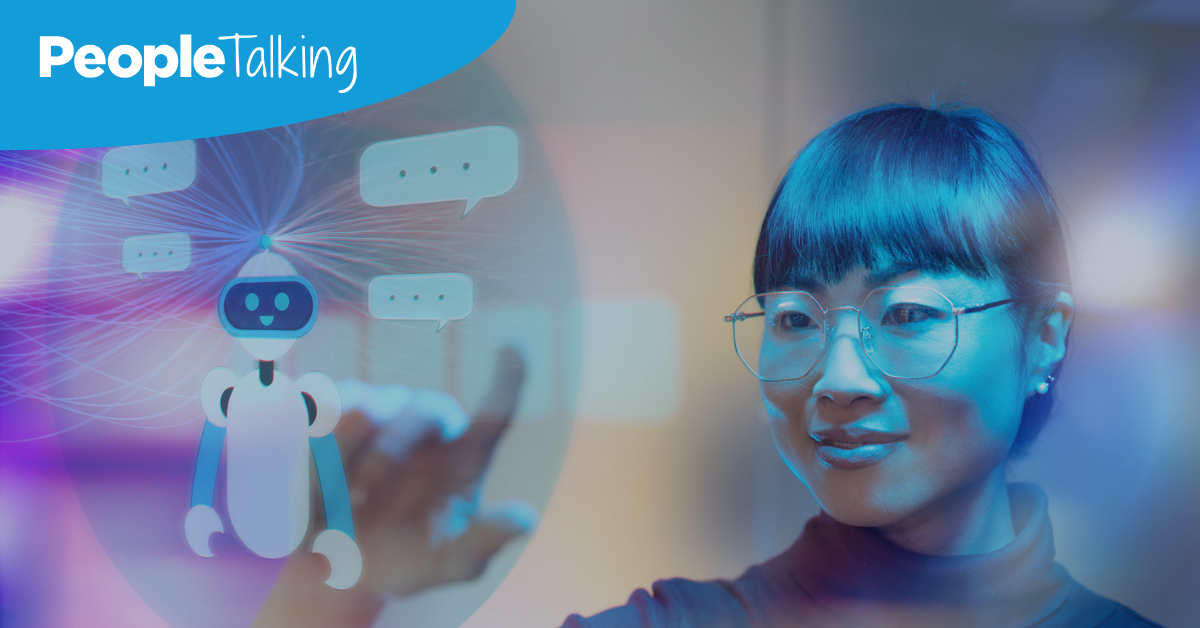
As AI continues to make inroads in our workplaces, is it possible to upskill and reskill without losing people?
For some time now, the godfather of Artificial Intelligence (AI), Geoffrey Hinton, has been sounding the alarm about the negative impact of AI, especially if the technology is left unchecked.
He has warned that not enough guardrails are in place to control the technology and said that he has regrets about some of his contributions to the field.
That being said, I think we need to focus on incorporating AI strategically. Workplaces of today should go beyond debating whether they need to incorporate AI into their organizations. That horse left the barn a while back…
Where are we today with AI?
The questions now are about how to integrate AI to enhance productivity, increase Return on Investment (ROI), help achieve organizational goals, and enhance retention and engagement – all at a time when some organizations are questioning the value of HR as a function. (Editor’s note: Uber cut 23% of its People and Places division in June, citing that parts of the organization had become “too complex and fragmented, with overlapping responsibilities, unclear ownership, and teams operating too far from the businesses and partners they support.” And Bolt’s CEO eliminated its entire HR department for “creating problems that didn’t exist.”).
In a study entitled, “The state of AI in 2025: Agents, innovation, and transformation”, data from McKinsey & Company indicates that 88% of organizations use AI in at least one business function, 35% to 41% of workers use generative AI tools on the job, and 59% of enterprises invest over $1 million annually. And these numbers are only going to go one way: up.
Can we reskill and upskill our teams as we further integrate AI into our workplaces?
One recent case study provides encouraging results.
According to a blog post analysis by labwyze, in 2021, IKEA’s parent company Ingka Group introduced an AI-powered customer service chatbot called Billie. Available 24/7, Billie took on the repetitive, high-volume queries that make traditional call-centre work exhausting and expensive.
By 2023 Billie was resolving about 47% of inbound customer inquiries, having handled roughly 3.2 million interactions covering product information and recommendations. It produced nearly 13 million euros in operating savings through 2023.
labwyze goes on to say that as Billie performed, IKEA focused on what it felt its team could do that AI could not. It landed on interior design. So, the company retrained 8,500 call-centre co-workers into remote interior design advisors, equipping them with new competencies in remote design consultation, digital retail sales, room planning, relationship building, and the kind of complex problem-solving a chatbot cannot handle.
The remote interior design channel, now staffed by the reskilled workers, generated 1.3 billion euros in sales by the end of fiscal year 2022, equal to 3.3% of Ingka’s total sales, and the company has set a target to grow it to 10% of revenue in the years ahead. In the 2025 fiscal year, their remote planning service helped more than 73,000 customers with furniture and kitchen design.
All of this was made possible because the company decided, ahead of time, to invest in AI training for 30,000 workers, with more than 4,000 employees trained during the 2024 fiscal year alone. As labwyze aptly puts it, “reskilling at this scale only works if it is treated as core strategy with real budget and executive ownership, not as a training afterthought.”
What can we take away from the IKEA example?
We need to build AI literacy across the organization. HR leaders should help ensure employees understand what AI is, how it is being used, where it can support work, and what risks and limitations it presents.
To emphasize, employees do not need to become AI engineers. However, most workers increasingly need baseline AI fluency to remain effective in evolving workplaces.
Moreover, given the speed of AI’s evolution, employees need to be provided with opportunities to keep up with new developments.
Organizations should consider some of the following: introducing organization-wide AI literacy programs; training managers and leaders on responsible AI use; incorporating AI learning into onboarding and leadership development; providing opportunities for ongoing AI learning and development; and encouraging practical experimentation with approved AI tools.
I do want to be clear that these actions may not necessarily stave off layoffs or downsizing. However, I do strongly believe we owe our teams, leadership, and organizations a duty of responsibility to ensure we are doing everything we can to help our teams grow and develop and consequently help our organizations achieve new heights and tangible successes now and in the future.
Anthony Ariganello, CM, FCPHR is the President and CEO of the Chartered Professionals in Human Resources (CPHR British Columbia & Yukon).
“PeopleTalking” is monthly column dedicated to covering key HR issues that matter to you, our members. The columns will be written in an op-ed style and will range between 500 and 750 words. Given today’s attention spans and bandwidths, we wanted to ensure the pieces were easily digestible and shareable.
And we want to hear from you! We always welcome feedback so do let us know your thoughts as each column appears. We also want to know if there are any particular topics you would like us to write about. After all, our aim is to help you in your role as an HR professional in your organization.